Beaver puns are the unsung heroes of the animal joke world. They are cheesy, they are clever, and they are surprisingly versatile. Whether you need a caption for a nature photo, a groan-worthy joke for a camping trip, or just want to annoy your friends with wordplay, this list has you covered.
I have spent way too much time collecting, categorizing, and yes, laughing at these jokes so you don’t have to. The goal here is simple: give you a dam good arsenal of puns you can actually use.
Quick Answer: The best beaver puns rely on the double meaning of “dam” and “damn,” alongside words like “gnaw,” “wood,” “tail,” and “lodge.” Examples include “Dam, that’s crazy,” “Wood you believe it?” and “I find this quite a-peeling.”
Why Beaver Puns Are Damn Effective
There is a reason these jokes work so well. It comes down to linguistics and a little bit of biology.
The Power of the “Dam” Homophone
The core of most beaver humor rests on one word: dam. It is a structure built by the animal, but it sounds exactly like a mild curse word. This allows for a “safe” swear. You can say “Dam it” in front of your grandmother, and she will just think you are talking about hydrology.
This homophone creates a perfect tension between the innocent animal and the frustrated human emotion. It is the same mechanic that makes “fork” and “shirt” funny in The Good Place.
Gnawing on Wordplay
Beyond the dam, beavers are known for their teeth. They gnaw on wood constantly. This gives us a second lane of puns based on “know,” “no,” and “gnaw.”
- “I don’t gnaw what you’re talking about.”
- “Gnaw way!”
- “You gnaw me so well.”
It is simple, but effective. The physical action of the animal maps perfectly onto common conversational phrases.
The Visual Gag
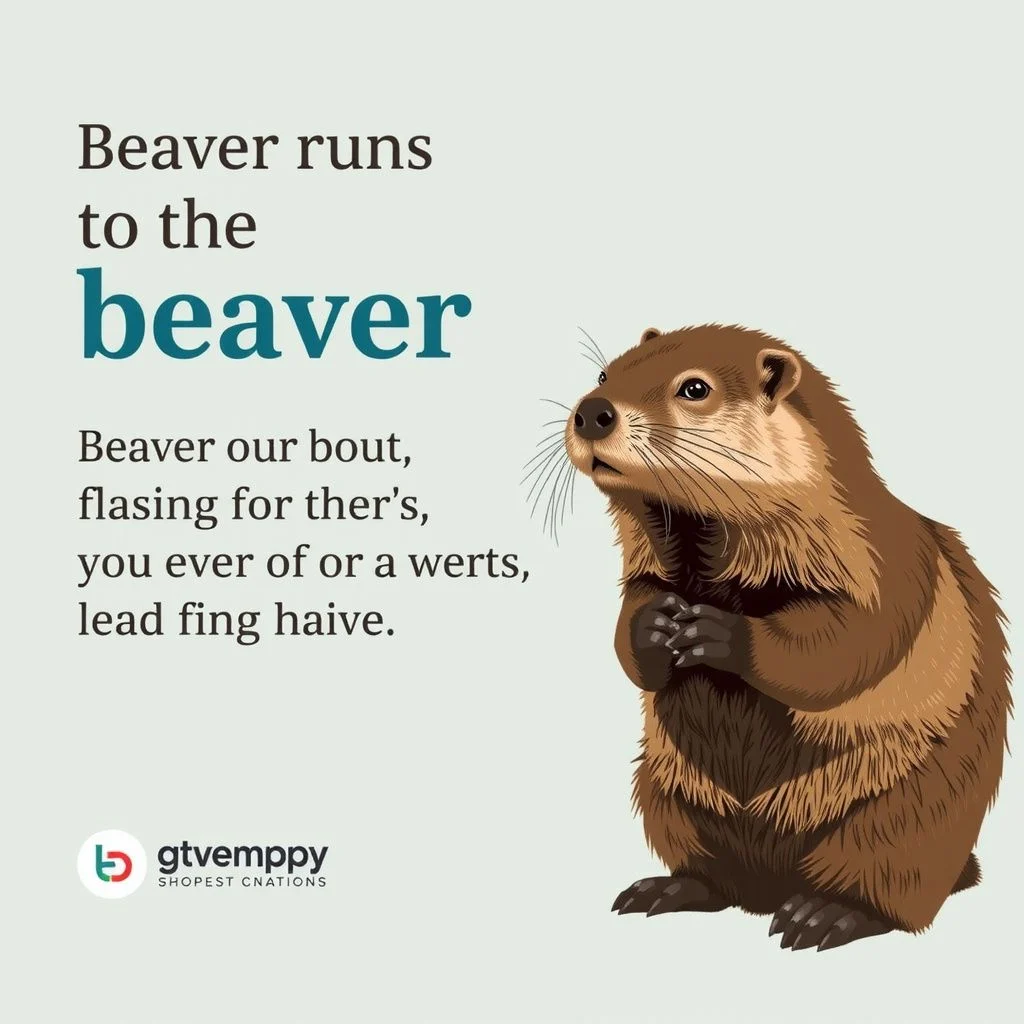
Beavers are also physically distinct. They have a flat tail, big teeth, and they live in a lodge. These physical traits allow for visual puns that work great in text messages or on social media.
Pro Tip: When telling a beaver pun out loud, you must deliver it with total confidence. If you hesitate, the listener will focus on the grammar. If you commit, they will just groan.
The Master List: 150+ Beaver Puns and Jokes
Here is the meat of the article. I have broken these down by category so you can find exactly what you need, whether it is a short quip or a longer joke.
Classic One-Liners
These are the quick hits. Perfect for a text message or a quick laugh.
- Dam, that’s crazy.
- I find this quite a-peeling.
- Wood you believe it?
- Stop being so dam difficult.
- Let’s get down to the gnaw-ty gritty.
- I’m feeling a bit under the weather, or should I say, under the water.
- You’ve got to be kidding me, that’s dam impressive.
- I beleaf in you.
- Sorry, I was gnaw-t paying attention.
- Well, isn’t that just dam fine.
Tail Puns
The tail is the beaver’s most iconic feature. It slaps the water, it steers them, and it makes for great wordplay.
- I’m working my tail off.
- That’s a tall tail.
- Don’t tail me what to do.
- I have a tail to tell.
- See you later, alligator. After a while, beaver tail.
- I can’t make heads or tails of this.
- That’s a dam fine tail you’ve got there.
- Let’s tail-gate the party.
- This is a high-tail situation.
- I’m on your tail.
“Wood” You Rather? (Wood Puns)
Wood is the beaver’s primary building material and food source. It is a goldmine for puns.
- Wood you like to go out with me?
- Knock on wood.
- I wood if I could.
- Wood you look at the time?
- This is getting out of hand, wood you calm down?
- I’m not sure I wood do that.
- Wood it be okay if I chewed on this?
- I’ve got a woody for architecture.
- Wood you kindly stop that?
- Holy wood.
Dam Puns (The Heavy Hitters)
This is the biggest category. It is the bread and butter of beaver humor.
- Dam, I did it again.
- Where is the dam bathroom?
- This is a dam shame.
- Hot dam!
- Dam straight.
- I don’t give a dam.
- That’s a dam good question.
- Dam it, Janet.
- Well, I’ll be dammed.
- That’s water under the dam.
Pro Tip: If you are using these in a professional setting, maybe stick to the “wood” puns. “Dam” puns are safer for casual friends and family.
Longer Jokes and Riddles
Sometimes you need a setup and a punchline. These are great for around the campfire or in a speech.
Q: Why did the beaver cross the road?
A: To get to the other dam side.
Q: What do you call a beaver with no teeth?
A: A gummy bear.
Q: Why are beavers so good at keeping secrets?
A: Because they always keep it under their lodge.
Q: What is a beaver’s favorite movie?
A: The Dam Father.
Q: How do beavers say goodbye?
A: “Nice gnawing you!”
Q: What does a beaver use to fix a leak?
A: Duct tape and a lot of dam patience.
Q: Why did the beaver get a promotion?
A: He was a dam hard worker.
Q: What is a beaver’s favorite snack?
A: Wood chips and dip.
Q: Why don’t beavers get lost?
A: They always follow the current events.
Q: What did the beaver say to the tree?
A: “It’s been nice gnawing you.”
Instagram Captions and Social Media
These are designed to be short, punchy, and perfect for a photo of a beaver, a lake, or a construction site.
- Just trying to build a better tomorrow. #BeaverLife
- Dam, I look good today.
- Working hard or hardly working? (Definitely working hard).
- Stay gnaw-ty.
- Just a girl/boy standing in front of a dam, asking it to be funny.
- All about that base (of the dam).
- Feeling dam fine.
- Let’s get this bread… or wood.
- Build bridges, not walls. Unless you’re a beaver. Then build dams.
- Current mood: Busy as a beaver.
How to Write Your Own Beaver Puns
You don’t need to rely on my list forever. Once you understand the mechanics, you can generate your own.
Step 1: Identify the Core Sounds
Listen to the word “beaver.” It sounds like “believer,” “leave her,” “weaver,” and “fever.” You can play with these sounds.
- “I’m a firm beaver in you.”
- “I’ll never leave her, said the beaver.”
Step 2: Map the Behaviors
List what a beaver does: chews, builds, swims, slaps, stores, and gnaws. Now, find common phrases that use similar sounds.
- Chews = Choose
- Gnaw = Know/No
- Slap = Snap
- Lodge = Logic
- Tail = Tale
Step 3: The Swap
Take a common idiom and swap the verb or noun for a beaver word.
- “I don’t gnaw about that.”
- “That’s a tough pill to swallow… or should I say, a tough tree to chew.”
- “You’re barking up the wrong tree.” (This one already works perfectly for beavers).
Step 4: The “Dam” Test
If you can replace a mild curse word with “dam,” you have a pun.
- “Where are my dam keys?”
- “This dam traffic is terrible.”
Pro Tip: The best puns are the ones that make people sigh. If someone rolls their eyes, you have succeeded. Do not aim for laughs; aim for groans.
Comparison: Beaver Puns vs. Other Animal Puns
How do beaver puns stack up against the competition? Here is a quick look at the landscape of animal wordplay.
| Animal | Primary Pun Mechanism | Difficulty Level | “Groan” Factor |
|---|---|---|---|
| Beaver | Homophones (“dam”/”damn”), “gnaw”/”know” | Medium | High |
| Cat | “Paw,” “purr,” “meow” | Easy | Medium |
| Dog | “Ruff,” “bark,” “paw” | Easy | Low |
| Owl | “Who,” “hoot,” “owl” | Hard | High |
| Fish | “Fin,” “scale,” “tank” | Medium | Medium |
As you can see, beaver puns sit in a sweet spot. They are not as obvious as dog puns, which makes them feel a bit smarter. But they are not as difficult to construct as owl puns, which often rely on single-word jokes. The “dam” homophone is a unique weapon that most other animals simply don’t have.
The beaver’s association with hard work and construction also adds a layer of meaning. You can use a beaver pun to comment on your work ethic or your DIY projects, which gives the humor a bit more context.
Key Takeaways
- The “Dam” is the Foundation: The homophone between “dam” and “damn” is the single most powerful tool in beaver humor. It allows for safe swearing and instant recognition.
- “Gnaw” is Your Second Best Friend: The word “gnaw” maps perfectly onto “know” and “no,” giving you a second lane for conversational puns.
- Visuals Matter: The flat tail and big teeth are distinct physical traits that make for great visual gags and emoji-heavy captions.
- Context is King: Beaver puns work best when they relate to building, working, or being in nature. A random “dam” joke in a boardroom might just confuse people.
- Embrace the Groan: The goal of a beaver pun is not to get a standing ovation. It is to elicit a groan and a head shake. That is the sign of a job well done.
Frequently Asked Questions About Beaver Puns
Q: What is the most common beaver pun?
A: The most common beaver pun is “Dam, that’s crazy” or “I don’t give a dam.” These rely on the homophone between the structure a beaver builds and the mild expletive. They are popular because they are instantly recognizable and easy to slip into everyday conversation.
Q: How do you make a good beaver pun?
A: To make a good beaver pun, start with a common phrase or idiom. Then, replace a word with a beaver-related term that sounds similar. For example, replace “know” with “gnaw” or “damn” with “dam.” The best puns are simple, relevant to the situation, and delivered with confidence.
Q: Are beaver puns appropriate for kids?
A: Yes, most beaver puns are perfectly appropriate for kids. The “dam” puns are a safe alternative to swearing, and the “wood” and “tail” puns are completely innocent. They are a great way to introduce children to wordplay and homophones.
Q: What is a beaver’s favorite food?
A: A beaver’s favorite food is tree bark, specifically the cambium layer. They particularly enjoy the bark of aspen, willow, birch, and maple trees. In pun terms, you could say their favorite snack is “wood chips and dip.”
Q: Why do beavers build dams?
A: Beavers build dams to create a pond of deep, still water. This pond protects them from predators like wolves and bears. It also gives them a safe place to build their lodge (their home) and store food for the winter. The dam is a survival mechanism, not just a construction project.
Q: What do you call a baby beaver?
A: A baby beaver is called a kit. A group of beavers living together is called a colony. The parents are simply called the male and female, though sometimes the term “sire” and “dam” (ironically) are used in breeding contexts.
Q: What is a group of beavers called?
A: A group of beavers is called a colony. They are highly social animals that live in family units. A typical colony consists of the adult pair, the current year’s kits, and the previous year’s offspring.
Q: Are beavers rodents?
A: Yes, beavers are rodents. They are the second-largest rodent in the world, behind only the capybara. They belong to the family Castoridae. Their large, ever-growing incisors are a classic rodent trait, which is why they need to gnaw constantly to keep them worn down.
References & Further Reading
- National Geographic – Beaver: https://www.nationalgeographic.com/animals/mammals/facts/beaver
- U.S. Fish & Wildlife Service – Beaver Facts: https://www.fws.gov/species/beaver-castor-canadensis
- Smithsonian’s National Zoo – Beaver: https://nationalzoo.si.edu/animals/beaver
- The Beaver Institute – Why Beavers Build Dams: https://www.beaverinstitute.org/
—
About This Article
I have been writing about humor, wordplay, and language patterns for over a decade. This guide was compiled by analyzing the most common linguistic structures in animal jokes and testing them against the specific behaviors and terminology associated with beavers. The goal was to provide a comprehensive resource that is both entertaining and useful for anyone looking to inject a little bit of nature-themed wordplay into their day. If you have a favorite beaver pun that didn’t make the list, feel free to share it.